
Weed strains can look straightforward on a menu until you’re face to face with something like “Jealousy, hybrid, 28% THC, limonene-dominant” and you’re thinking, “Cool… so what does that mean for me?” If you’ve ever felt like you’re doing a little guesswork, you’re in good company. Once you know what each line is trying to say, most menus start to read like a quick set of notes instead of a puzzle.
At Aura Cannabis Co., we want you picking what fits your energy, not just the loudest name or the biggest number. So we’re breaking down what you’re actually seeing in a listing, what matters most, and the few questions that instantly make any menu easier to shop.
Cannabis strains: what a “strain” listing is really telling you
When a menu says “strain,” it usually means a cultivar, which is just a cultivated variety of cannabis grown for a repeatable profile. You might also hear chemovar or variety. Same idea. What you’re really shopping is the plant’s chemistry, mainly:
- Cannabinoids like THC, CBD and CBN (the compounds tied to intensity and balance)
- Terpenes (aroma and flavor compounds that also help explain why two jars with similar THC can feel different)
One quick reality check: strain names are not governed by a universal registry. Two growers can sell the same name, and the experience can still vary based on the cut, the grow, and the cure. So think of the listing as a set of useful clues. The more detail you see, the easier it gets to choose on purpose.
Weed strains on menus: start with THC and CBD, but don’t stop there
If you want a simple starting point, look at THC and CBD. THC stands for tetrahydrocannabinol, the main intoxicating cannabinoid. CBD stands for cannabidiol, which is non-intoxicating and can change the overall feel for some people. If you want a clean explanation of what those numbers generally mean, WebMD’s overview of cannabis strain potency and cannabinoid content lays out the basics in plain language.
Now the part we say in the store all the time: THC is not a quality score. It’s more like a volume knob. Sometimes you want it turned up. Sometimes you don’t, especially if you’re newer, coming back after a long break, or trying a new format. Also, two flowers can both test at 24% THC and still feel miles apart because of freshness, cure, and terpene profile.
How we use the numbers when we’re helping you:
- Pick a range that fits the moment, not a personal record.
- If CBD is meaningful on the label, it can be a nice “rounding” factor for a lot of people.
- If the listing shows THCa instead of THC, that’s still normal. THCa is the form found in raw flower that converts with heat.
How to read weed strains by terpene profile (your fastest shortcut)
Terpenes are what make one strain smell like citrus and another smell like pine, earth, or pepper. They’re also one of the best quick clues for the character of a strain, especially when THC looks similar across a few options. If you’ve ever wondered why two “hybrids” can land so differently, terpenes are often the missing piece.
Here are a few you’ll see a lot, plus the kind of aroma they usually bring:
- Myrcene: earthy, musky
- Limonene: bright citrus
- Pinene: pine, herbal
- Caryophyllene: peppery, spicy
If you want a longer, friendlier breakdown of common terpene names and how to think about them, use our guide to understanding cannabis terpenes and what they mean for your experience. And if you’re in-store, ask us what the top terps are on that batch. Terpene percentages can shift from harvest to harvest, even when the name stays the same.
Weed strains and the indica, sativa, hybrid labels: useful, not destiny
Most menus still organize weed strains as indica, sativa, and hybrid. As a general shopping shortcut, indica-leaning options are often described as more body-forward, and sativa-leaning options are often described as more heady or upbeat. But those labels are not a guaranteed “effects” promise, and modern genetics are blended enough that the categories can get messy.
Medical News Today’s overview of indica vs. sativa vs. hybrid makes that point clearly: the labels can be inconsistent, so you’re better off treating them as a starting filter and then checking the chemistry.
Our in-store approach is simple:
- Use indica / sativa / hybrid to narrow the list.
- Use THC and CBD to set your comfort level.
- Use terpenes to fine-tune the vibe.
Weed strain names: what the name can hint at (and what it can’t)
Strain names are part genetics, part flavor hint, part cannabis culture, and sometimes just branding. “Kush,” “Haze,” or “Cookies” might point to a family line. “Lemon” or “Berry” might nod to aroma. But the name alone can’t reliably tell you how it’ll land, especially across different growers or different cuts.
If you’re reading a menu and the name feels random, you’re not missing a secret code. You’re just seeing the creative side of the plant.
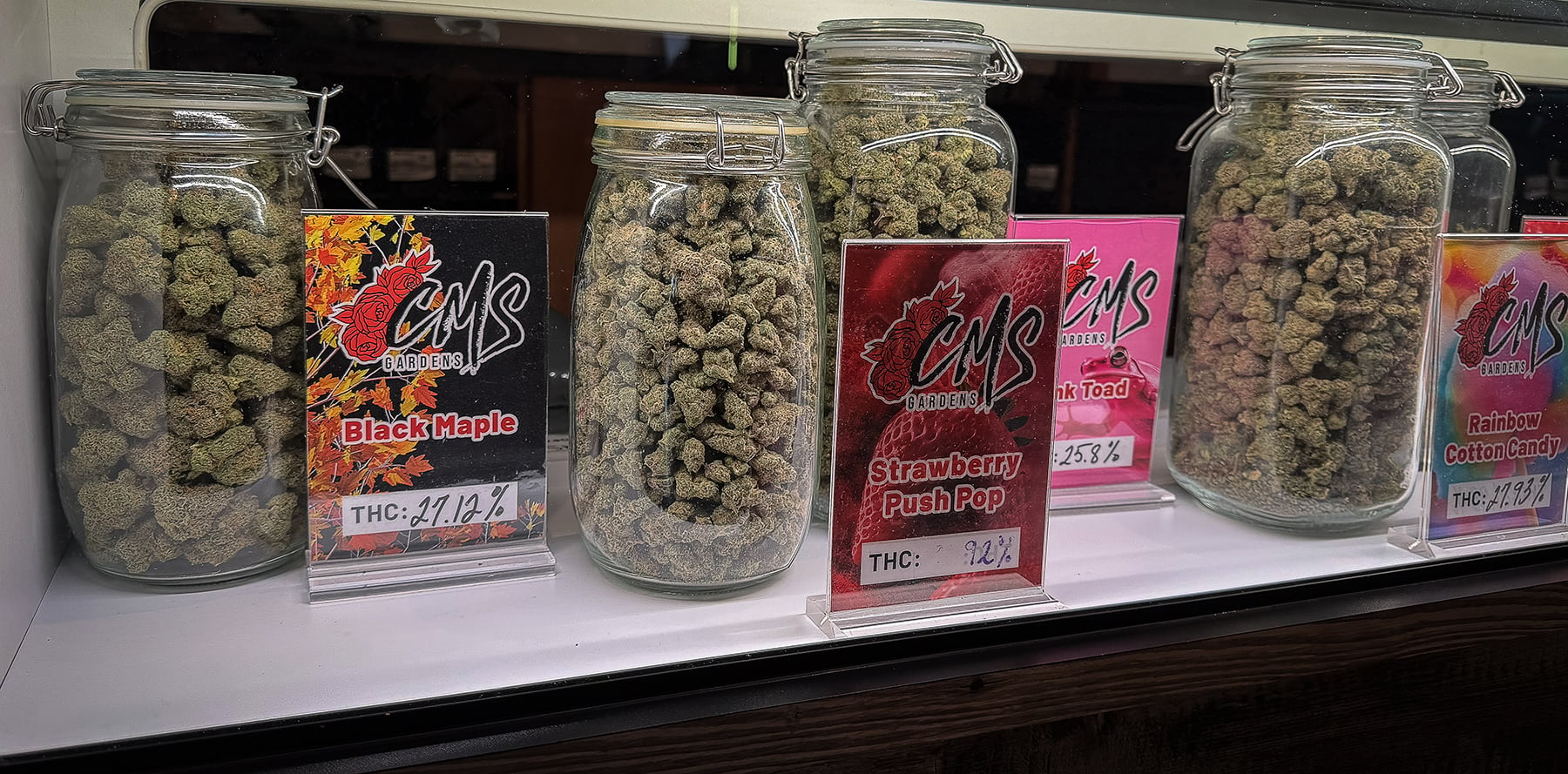
Lineage and grower: the details experienced shoppers check first
When a listing includes lineage, you’ll see parent strains written like “GMO x Zkittlez.” Lineage helps when you already know what you like. Maybe you keep gravitating toward minty dessert profiles. Maybe you avoid loud floral jars. Genetics can point you in the right direction without you having to memorize every name on the board.
Grower matters too. Cultivation style, harvest timing, drying, and cure all show up in aroma, bag appeal, and how consistent a strain feels from batch to batch.
At Aura Cannabis Co., we carry a curated mix of local and regional growers alongside our own house-grown flower, pre-rolls and rosin from our Massachusetts cultivation, powered by MASS Genetics. If you’re shopping in Fall River, you’ll see that seed to shelf connection show up on the menu, and we’ll happily tell you what’s freshest right now.
How to compare two strain listings fast (without getting stuck on one number)
If you’re trying to pick between two options and you don’t want to overthink it, use this quick order. It works online, and it works even better when you’re standing at the counter with us.
- Name your vibe: relaxed, creative, focused, uplifted, sleepy. It’s a goal, not a guarantee.
- Set your potency comfort zone: look at THC and whether there’s meaningful CBD.
- Use terpenes to choose the character: citrusy, piney, earthy, sweet, spicy.
- Use strain type as a tie-breaker: indica, sativa, hybrid helps narrow, but it’s not the final word.
- Check freshness and producer: ask what just came in or what’s showing best right now.
| Menu field | What it tells you | How you use it |
|---|---|---|
| THC % | General intensity potential | Pick a range that matches your tolerance and setting |
| CBD % (or ratio) | Balance and a different “shape” to the experience | If you prefer a gentler ride, look for meaningful CBD content |
| Terpenes % + top terps | Aroma and character clues | Once potency fits, this is your best predictor for picking your vibe |
| Indica / sativa / hybrid | Traditional category and menu organization | Helpful filter, not a guarantee |
| Lineage (genetics) | Family resemblance to other cultivars | Great when you already know the profiles you like |
| Grower / brand | Consistency, cultivation style, cure | Ask your budtender what’s freshest and most dialed-in |
What you’ll see at Aura: the Bud Bar, daily curation, and our house strains
We keep shopping simple, whether you’re browsing online or taking your time in person. If you like choosing by aroma and bag appeal, start with the Bud Bar. It’s built for comparing flower intentionally, not speed-running a menu.
You’ll also see our curation callouts, because sometimes you want a shortlist before you fall down the strain-name rabbit hole. Menu Highlights and Staff Picks are where we surface what’s showing especially well right now.
If you’re shopping Fall River, keep an eye out for our house-grown lineup from our Massachusetts cultivation, powered by MASS Genetics. A few you’ll see called out often:
- SKT (Jilly 2 x Hughy), strain type: sativa
- Strawnana (Bubblegum x Banana OG), strain type: sativa hybrid
- Blue Zushi (Zkittlez x Kush Mints 11), strain type: indica hybrid
- Deadhead OG (Chem D x SFV OG), strain type: hybrid
- Lizzie B (GMO x Zkittles), strain type: hybrid
We keep those profiles updated on our strains page, so if you want the quick reference for genetics and how we categorize them on the menu, browse Aura’s Massachusetts cultivation strain library.
FAQ: How to read a strain listing on a dispensary menu
Is higher THC always better when I’m choosing weed strains?
No. Higher THC can mean higher potential intensity, but it doesn’t automatically mean better quality or a better match for your vibe. Freshness, cure, and terpene profile can matter just as much.
Why do two products with the same strain name feel different?
Because “strain” is a category, not a promise. Different growers may use different cuts, and even the same grower can put out batches that vary based on harvest timing, drying, cure, and terpene content.
Are indica and sativa real, or just marketing?
They’re real as legacy categories and useful for menu organization. They’re just not reliable enough to use as your only decision point. You’ll usually get a better read by combining strain type with THC, CBD, and terpenes.
What if the menu doesn’t list terpenes?
Ask your budtender what it smells and tastes like, and whether there’s a COA (Certificate of Analysis) available for that batch. If terpene data isn’t listed, aroma, lineage, and producer reputation become more important.
How do you choose between flower, pre-rolls, vapes, and edibles if you like a certain strain?
Start with how you want to consume and how fast you want effects to show up. Then look for similar terpene profiles across formats, not just matching names. Our guide to choosing the right cannabis product type breaks it down without the jargon.
For more detailed advice, check out our blog post on how to read cannabis lab results and COAs, which can help you make even more informed choices at the dispensary.
Conclusion: make the menu work for you
Once you know how to scan THC and CBD, use terpenes as your shortcut, and treat indica, sativa, and hybrid as a helpful filter, strain listings stop feeling like a wall of numbers. You’re not trying to decode weed strain names perfectly. You’re building a better feel for what you like, one good pick at a time.
Want a quick recommendation based on what you’ve enjoyed before? Stop in and talk with a budtender, or reach out through Aura’s Contact page.


